Making an AI offer easy to understand, and easy to trust
A website and early-journey redesign for Studio Vi, a digital partner moving from agency work towards reusable AI modules, so B2B visitors can understand the offer, validate the company and find a sensible next step.
At a glance
2
entry routes: outbound validation and inbound discovery
50+
AI modules, grouped by sector
7
design decisions, each traced back to research
What we did
- Journey mapping
- Module detail page
- Sector-based module overview
- Industry, expertise and module paths
- Neo Bauhaus visual system
- Whitepaper & contact routes
The challenge
Studio Vi was moving from a traditional agency model towards a more scalable AI solution model. Internally, reusable AI modules were already being built, but on the website and early digital touchpoints that direction wasn’t visible yet. Potential clients could struggle to see what Studio Vi offers, how the modules relate to their needs, and why the company is relevant to them.
Visitors arrive in two ways. Outbound visitors come after a LinkedIn message, a sales contact, an event or a referral, and check whether Studio Vi is credible. Inbound visitors find an article through Google and need to understand the offer on their own before they get in touch.
How we helped
- 01
Designed two routes instead of one funnel
A LinkedIn validation route for outbound visitors and a Google content route for inbound ones. Hotjar and Google Analytics showed both behaviours: some visitors moved from landing pages to solution, industry and expertise pages; others stayed in the articles and kept reading. A single direct-to-contact journey would have been too flat, and too pushy, for a B2B decision.
- 02
Started from the deepest page
Before designing the wider website, we defined the module detail page: context, problem, value, visual proof, related modules and a next step. Designing from the most concrete page outwards gave the rest of the journey a clear destination.
- 03
Showed the AI without giving it away
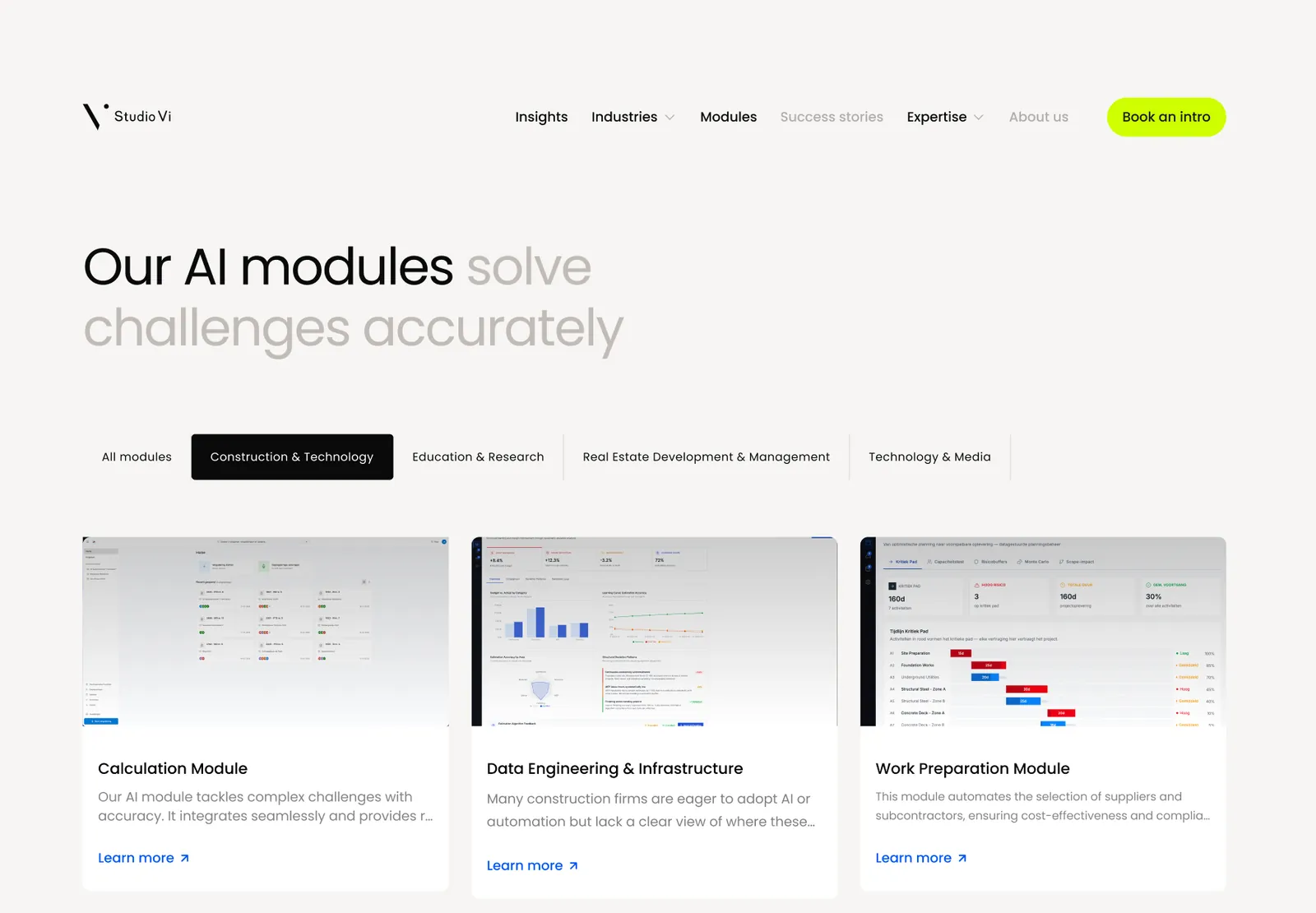
A surface-level demo interface shows what working with a module feels like, without exposing the back end, the technical process or the code. Enough to build trust, without promising more than the product does.
- 04
Grouped 50+ modules by sector
Instead of one long catalogue, modules are grouped by industry with filters, so visitors start from a context they recognise and understand the offer step by step, not all at once.
- 05
Gave every touchpoint one visual language
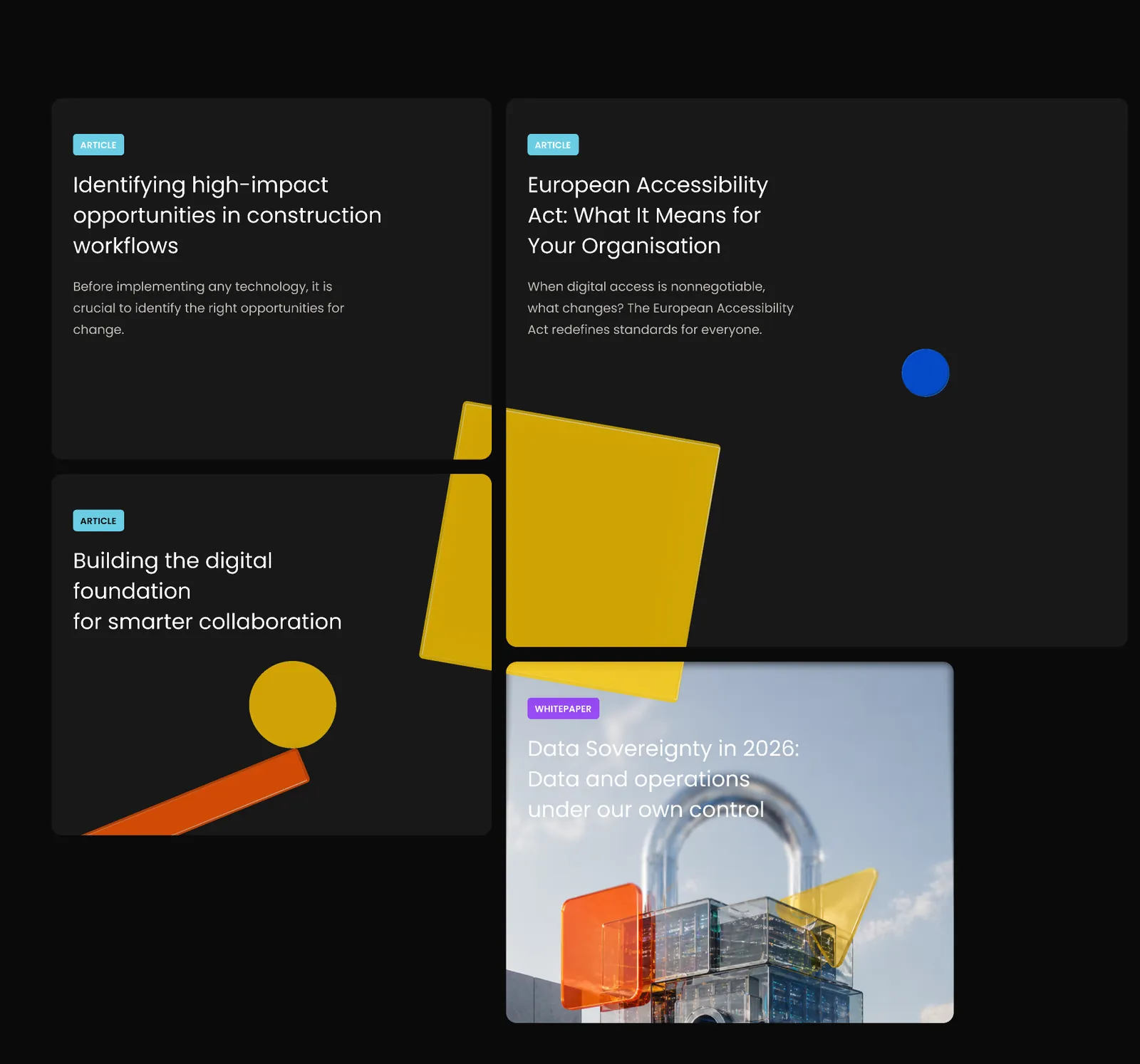
A Neo Bauhaus system of colour, geometric forms and composition now runs across LinkedIn, landing pages, articles, module and industry pages, banners and whitepapers, so Studio Vi feels like one coherent company from first impression to deeper exploration.
First touch
Lands on
Validates through
Outbound
- Sales contact
- Events & referrals
- Landing page
- Industry
- Expertise
- Module
Inbound
- Google search
- Article page
- Industry & expertise
- Module
- Whitepaper
The outcome
A connected journey that supports both outbound validation and inbound understanding.
Visitors get a clearer idea of what an AI module is, more reasons to trust the company, and a next step that fits how ready they are, from a whitepaper to a conversation.
For Studio Vi, the module offer became visible, structured and connected to the sales journey, and AI is presented as something concrete and explainable rather than a vague promise. Parts of the design are already live; the module overview launched late in the project, so its grouping is still being validated with real visitors.
Insights
Different visitors need different routes.
Outbound visitors come to validate; inbound visitors come to understand. One funnel would have served neither.
Design from the deepest page outwards.
Defining the module page first gave the rest of the journey a clear destination.
Show enough to trust, not everything.
A surface-level demo shows what a module feels like without promising more than the product does.
“He combines thorough research with creative ideas and consistently translates them into polished, practical outcomes. His branding, digital designs and UX work delivered lasting value to our team and were implemented in real projects.”
 Sam de VriesDesign Lead, Studio Vi